Three things. How to finish a record for a person who has an opinion about it. The craft, at real depth, in the places where depth makes a difference. And the business of getting paid for it, so you can keep doing it.
Most courses teach something else. They teach the industry as it was when the curriculum was written, at a depth that's wrong in both directions, and they finish with an assessment instead of a record. That isn't a dig at the people teaching. I've been one of them. It's a description of what a training package is, and what it was never built to do.
So this is the checklist. Hold it up against any course you're considering, mine included, and see what falls through. If you're still deciding between a diploma, a tutor or an intensive, that comparison is its own post.
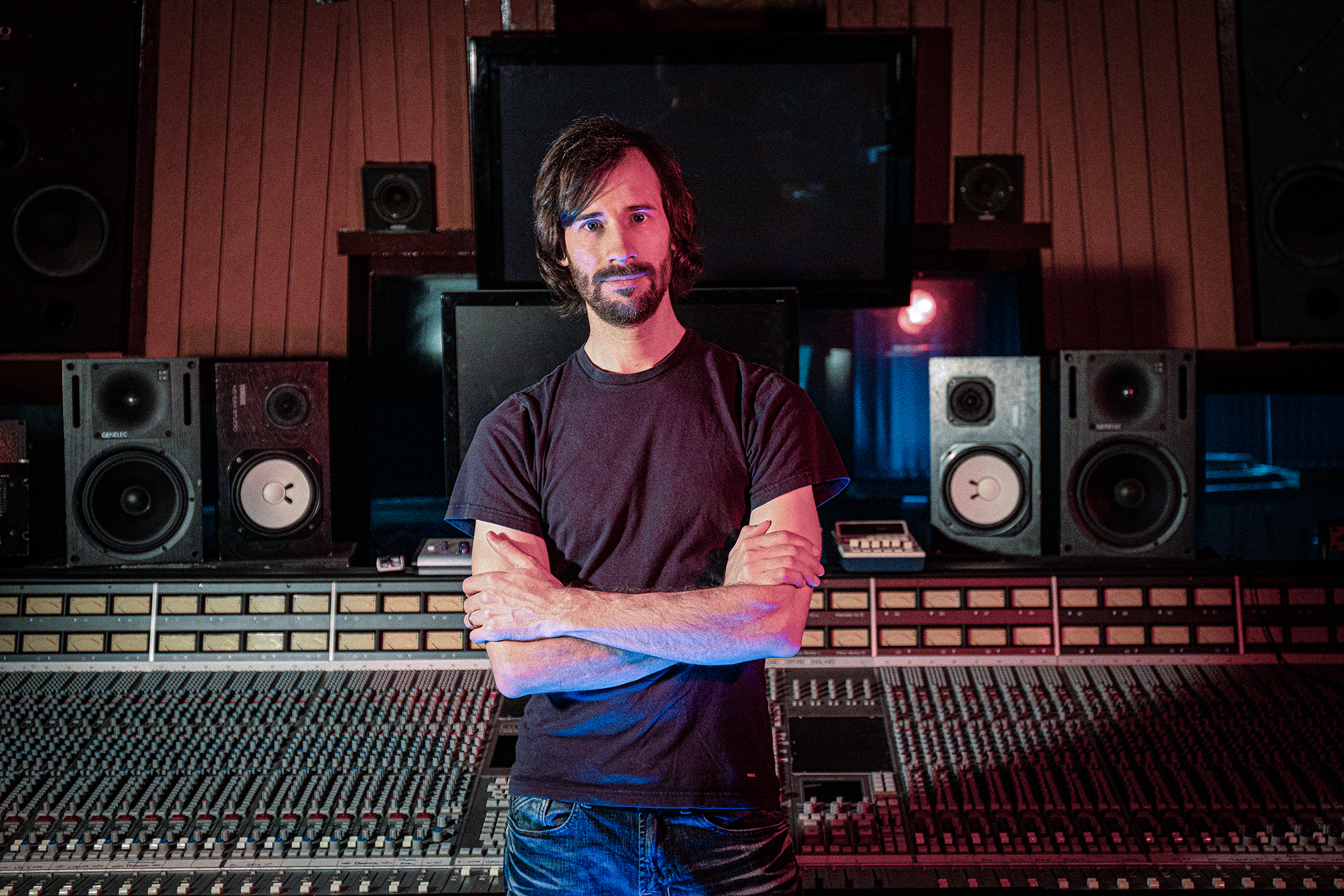
I've taught Sound Production at university level. I've also spent twenty-five years in commercial studios, on records for Sony, Mushroom, Netflix and Eurovision. I've written the assessments and I've hired the graduates, so I've seen this from both sides of the desk.
First, what actually changed
When I got into this twenty-six years ago, you could still knock on a studio door. There weren't many studios, but the ones that existed hired assistants, so there was such a thing as a job. Bands and labels sold CDs. A hard-working band could sell them for twenty dollars at gigs and raise fifty or a hundred thousand dollars for a record. Streaming didn't exist.
Now most of the big rooms have shut. The industry is freelancers. The job you could knock on a door for mostly doesn't exist, budgets are a fraction of what they were, and the studios are smaller. At the same time, more people are making records than ever, because the DAW came free with the laptop.
Here's the part nobody says out loud: that makes it easier to compete, not harder, if you have the right skills. The field is full of people making rookie mistakes on their own. Someone who can actually finish a record, on time, for a client, stands out faster than they ever did.
A course built for the old industry teaches you to be an assistant in a studio that closed. A course built for this one teaches you to be the freelancer people hire.
The depth is wrong, in both directions
I want to be precise here, because this is where courses get defended and attacked for the wrong reasons.
When I taught acoustics at university, the curriculum went deep. Absorption coefficients of different materials. The algebra behind room modes. Real physics, properly taught. And almost none of it is what a working producer uses, because by the time a room problem needs that level of detail, you hire an acoustician who's been doing it for thirty years. You don't do it yourself.
What you do need is the practical layer. What flutter echo sounds like and how to treat it. What a standing wave is, where it lives in a room, and how to keep it out of your low end. That's a week, not a semester.
The semester belongs somewhere else. The things that decide whether you get hired again deserve the depth, and mostly don't get it. How to sell. How to manage a client. How to coach a vocal performance out of a singer who's tightening up on take four. How to mix, properly, for months, not as one unit among twelve.
So the question to ask isn't "does the course cover acoustics". Every course covers acoustics. It's whether the hours go where the work is.
What a graduate can actually do
I'll say this plainly because I've seen it from both sides and it's the thing parents least want to hear.
A graduate from a two-year course is ready to start learning. That's not an insult. It's just where they are. They're not much more use in a session than someone who can wind up a cable, and they might not do that right yet. Two years and forty thousand dollars have bought them a place at the very beginning of a career.
I run a short intensive, so weigh this however you like, but I'll make the claim anyway: give me someone with a bit of self-practice and ten days in a real room, and they leave at roughly the same point. Less time in a seat, the same place on the road. That's not because the intensive is magic. It's because the two years were mostly spent on the wrong things at the wrong depth.
The checklist
Six things a music production course should teach you in 2026. Ask about each one, and listen for how specific the answer is.
1. How to finish a record, not an assessment. An assessment has a marking rubric and a due date. A record has a client, a release date, and a person who'll tell you the chorus doesn't lift. Ask how many records students finish, for real people, during the course. Not projects. Records.
2. How to work with a client who has an opinion. Scoping a job so you know what they actually need, rather than what they said. Handling the moment they hate the mix and can't tell you why. Coaching a performance. This is most of the work, and almost no course treats it as a subject.
3. The business of being paid. What your hourly rate needs to be for you to be profitable, worked out from your real costs, not guessed. How to handle an objection and reframe it. How to scope a project so you don't do three weeks of work for one week of money. I taught myself all of this after I graduated, and it's the part that made the career sustainable.
4. That a production is a team. At the top end of town, a record is composer, arranger, producer, engineer, mixer and mastering engineer, and they're different people. You cannot be the best at all of those and the best player of five instruments. A good course teaches you the roles, what each one is for, and where you sit. A bad one implies you'll do everything, which is how people end up doing everything badly.
5. Theory at the right depth. Acoustics, electronics, signal flow, gain staging. You need them. You need the practical layer of them, solid, and then you need to get back to making records. If the course spends a semester on the physics you'll never use and a week on the mixing you'll do every day, it's upside down.
6. The DAW as a tool, not a subject. A DAW is a virtualised tape machine, a mixing console and a MIDI sequencer. That's all it is, and once you understand those three things, which one you learned in doesn't matter. Pro Tools, Logic, Cubase, the principles are identical. Pick the tool that suits the kind of production you do. My own opinion, and it is an opinion, is that Pro Tools mixes better than anything else because of its routing and its automation, and automation is close to the most important thing in a mix. But a course that teaches you the software instead of the principles has taught you a menu.
The one test
Here's what I'd ask on any open day, and I'd ask it politely and then wait.
"Can you show me a student's work from before the course, and the same student's work after?"
Not a showreel. Not the best graduate from 2019. A before and an after, from the same person, so you can hear the change the course actually made. Any course that's doing its job will have this, because it's the only thing that proves the job was done. Any course that offers you a brochure instead has just answered the question.
Where a course still earns its place
I said I'd be honest in both directions.
If you need a nationally recognised certificate, because a visa asks for one, or an employer in broadcast has it on the job ad, or you want the pathway into a degree, then a diploma is the right tool and this checklist is how to pick a good one. RMIT do it well. Go and get it, and ask them the before-and-after question too.
And if you're not sure you want any of this yet, spend nothing. There are free short courses at academyofaudio.com that'll tell you inside a weekend.
If you know you want it, and nobody needs your certificate, find the course that answers the six questions with specifics. That might be an intensive. It might be a year assisting in a studio. Whichever it is, it should leave you able to finish a record for someone with an opinion, and know what to charge them.