
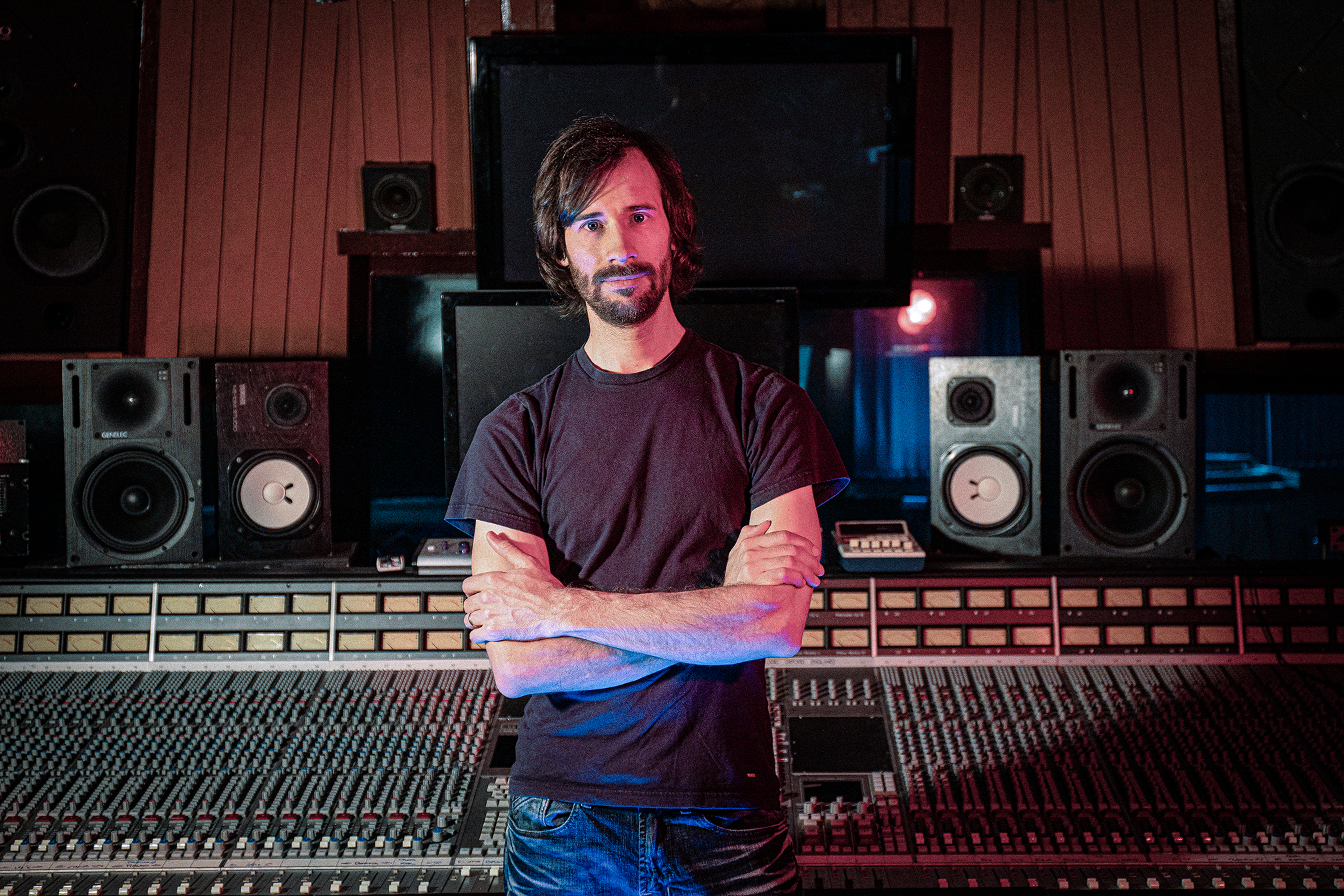
Prepare everything that isn't the music before the day, so the day can be about the music. That means the tempo, key and lyrics are settled, there's a list of every part you need to record, there are charts with bar numbers that match the session, the files are in the studio's hands, and the room is set up before you walk in.
Go in without that and you start a countdown. You spend the session trying to get done whatever you can remember, and there's no room left for the things you're actually paying a studio for: experimenting, getting comfortable, and catching the take that has something in it nobody planned.
Rather than tell you a horror story, here's what my sessions look like. Hold yours up against it and decide whether you've been wasting time.
What a prepared session looks like
By the time the artist arrives, the session is already set up. The microphones are in place. The sessions are imported, with the song sections marked. Chord charts are on the stands. And there's a checklist of every part we need to record.
So even with drums, and even if the drummer hasn't set up yet, we're recording within an hour. Depending on the calibre of the musicians, the rhythm section for one song might take twenty minutes, or it might take an hour. Either way, nobody is standing around.
That preparation pays off all day.
The checklist means nobody has to remember anything. Did we get the doubled acoustic in the chorus? Yes. The counter-melody in the bridge? Not yet, let's do that now. No last-minute panic about what's been forgotten.
The bar numbers in the session match the bar numbers on the charts. If someone says "let's drop into the chorus", it's marked Chorus 1, Chorus 2, Chorus 3. Nobody's squinting at a waveform trying to work out where the chorus starts. And if we're running out of time and verse two is the same as verse one, we know it's right, so we can copy it across.
It makes changes easy, not hard. Want to change the key, double the length of the second chorus, or cut the bridge in half? Save a new version, make the edit, mark it on the chart, and go.
That's the point people miss. Preparation doesn't kill the magic. Preparation is what gives you the space to experiment. A kitchen preps everything before service for the same reason: when the orders start coming in, the chef is free to cook.
What an unprepared day looks like
I know this one because I've lived it, before I started working this way.
The session is booked for 8am. Recording starts at 12:30. In between, the mics are being set up with the drummer in the room and the rest of the band sitting around waiting. By the time everyone's ready, it's lunch, blood sugar is low, and everyone's tired. Then you start tracking with no reference to play against. Then you stop to put the markers in. Then you find out the guitar strings are old, or haven't been stretched in. The intonation is out on an instrument. The drums aren't tuned.
Every one of those is time. And with a producer, an engineer and a studio on the clock, that time could easily be costing you $400 an hour.
What to sort before the session
If you're working with a producer, most of this happens together, ahead of time. When I'm producing, we build a guide session first: the minimum number of tracks that proves the direction is right. That might be acoustic guitar or piano and a voice, or it might be programming and a few riff ideas. It does two jobs. It tells us the song is going the right way, and it's the guide the first musicians play against. By the day of the session, the tempo, key and lyrics are done, and the stems or multitracks are ready.
Then there's the list. Every part that needs to be recorded goes on it, down to the small ones: doubled acoustic guitars in the chorus, the counter-melody on electric guitar in the bridge. Any little element that has to be captured should live on a list somewhere, not in someone's head.
And there are the charts. I write them, or my arranger does. Sometimes the band does, but a chart written for the session is much faster to read: clean, functional, and laid out so nobody has to think about it.
If you're booking a studio without a producer, do the same things yourself:
- Decide the tempos, and send them.
- Put the markers in. If you've been working in a different program from the studio's, put your section markers in and export a MIDI file. The markers go across with it, so the studio's session is mapped before you arrive.
- Write the list of parts.
- Choose your references, and send them.
- Ask the studio to set up beforehand: the night before, or have the assistant in early. Expect to pay for that time, and pay it gladly. It's far cheaper than everyone waiting around for four hours.
The bar 11 trick
One small habit makes all of this smoother. I start the song at bar 11 in the session, not bar 1. That leaves ten empty bars at the front for anything we decide to add, like a pickup, an intro or a count-in, without shifting everything else.
Then I renumber the chart in my notation software so the chart starts at bar 11 as well. The session and the chart always agree. When someone says "from bar 43", everyone is in the same place, on the screen and on the stand.
Don't overcook the demo
This is where preparation goes too far. Working on a demo until it sounds like the finished record is a trap, and it has a name: demo-itis.
Here's how it bites. You spend two years meticulously building a demo. Then you record the real version in four hours, and it might not be as detailed or nuanced as what you've been listening to every day for two years. You'll be underwhelmed, and it's disheartening.
Prepare the song, not the production. I'll even sing guide vocals with mistakes in them on purpose, or leave words out, so nobody gets attached to the demo take and ends up stuck choosing between the demo and the real thing.
What to bring on the day
- Your session files, if you have them. If you've been working on a laptop, bring it. It's handy for re-exporting something, or playing an old idea someone suddenly remembers.
- Other versions and mixes of the work in progress.
- Spare strings, sticks and drum heads, and a tuner.
- Food and snacks, or ask the studio if it's easy to get lunch nearby.
- Water.
- A notepad.
- Lyrics and charts printed out, or confirm the studio will print them.
On the day
Keep your blood sugar and your hydration up. That's what the snacks and the water are for. Singers need to be careful about what they eat and drink. Other musicians, not so much.
Stop when decisions get hard. When every choice feels like a struggle and you're working at less than half your normal speed, you could spend another four hours and get an hour's work done. Go home. If the session runs over several days, it's better to be fresh tomorrow than to burn out after the first day.
Know when a take is good enough. Here's my rule of thumb. Get a sense of the performer's baseline, their normal take. Then go for three above-average takes. Once you have three, that's the best you're likely to get at that time without significantly more practice.
Three questions people ask next
What should I bring to a recording session? Your session files and laptop if you have them, spare strings, sticks and heads, a tuner, food, water, a notepad, and printed lyrics and charts.
How do I know when a take is good enough? When you have three takes that are clearly better than the performer's usual standard. Then you've got it.
Should my demo sound finished before I go into the studio? No. Make it good enough to prove the song and to guide the musicians. Polish it too far and the real recording can feel like a step backwards, even when it isn't.
Where to go from here
If you'd rather not go into your first session alone, the producer directory on academyofaudio.com lists verified producers, mixers and engineers, and you contact them directly. If you want to talk your session through first, request access to the Academy of Audio community. And if you want to learn the whole process yourself, from guide session to finished record, that's what the intensive is for.
Get the boring things done before the day. The day is for the music.
